
If you’ve been conducting soft skills training for some time, you’ve probably come across plenty of articles that promise 50 body language games or 20 fun communication activities. While these can be useful for inspiration, there’s one problem with simply collecting activities.
Activities don’t change behaviour. Good facilitation does.
I will be giving you body language activities for your soft skills training programs, but before that, spare some minutes to think about this:
As trainers, we may have guided participants like:
- “Stand straight.”
- “Maintain eye contact.”
- “Don’t fold your arms.”
The advice sounds simple enough, but think about it from the participant’s perspective.
- How exactly should they stand?
- How much eye contact is appropriate?
- What should they do with their hands instead?
Most participants leave with instructions but without understanding why those behaviours matter or how to apply them naturally.
That is where well-designed body language activities make the difference.
Over the years, while designing programs on interview preparation, confidence, public speaking, professional etiquette and leadership, we’ve realised that the objective of an activity is never to keep participants engaged. The real objective is to help them observe behaviour, experience communication differently and leave with something they can apply immediately.
This article isn’t simply a collection of activities. Instead, I’d like to share the thought process behind designing them, because once you understand that process, you’ll be able to create meaningful learning experiences for almost any soft skills program.
Start With the Behaviour, Not the Activity
One mistake many new trainers make is deciding on an activity first.
- “I’ll do a role play.”
- “I’ll show a video.”
- “I’ll conduct a game.”
Instead, begin by asking yourself one question: What behaviour do I want participants to demonstrate differently by the end of this session?
If you’re conducting an interview preparation program, perhaps you want participants to become more aware of how they respond when they don’t know an answer.
If you’re teaching confidence, maybe the objective is to help participants recognise the physical signs of nervousness before they become visible to others.
If you’re preparing future team leaders, perhaps you want participants to understand how credibility is communicated during discussions.
Once the behaviour becomes clear, choosing the activity becomes much easier.
The Same Activity Can Teach Different Skills
One of the biggest misconceptions about training activities is that every course needs completely different exercises. In reality, a well-designed activity can be adapted for different learning objectives.
Imagine asking two participants to introduce themselves to each other. The activity itself is exactly the same.
But what you observe, and the discussion that follows, can change completely depending on the course.
During an Interview Preparation Program
You may ask participants to notice:
- How quickly did they begin speaking?
- Did they appear comfortable answering unfamiliar questions?
- Did their enthusiasm match what they were saying?
- How did they recover after making a mistake?
The objective is interview readiness.
During a Public Speaking Program
The focus shifts. Now participants observe:
- How well ideas were structured.
- Whether gestures supported key points.
- How the speaker connected with the audience.
- Whether transitions between ideas felt natural.
The objective is audience engagement.
During a Confidence Workshop
The same introduction becomes an opportunity to discuss visible signs of nervousness.
Participants may notice:
- hesitation before beginning,
- unnecessary apologies,
- nervous laughter,
- rushed speech,
- self-conscious movements.
The objective isn’t to criticise these behaviours. It’s to help participants recognise them before they learn how to manage them.
During a Leadership Program
Now the discussion changes again. Participants observe:
- Did the speaker sound decisive?
- Did they encourage interaction?
- Did they appear approachable?
- Would you feel comfortable working with them?
Exactly the same activity, but with completely different learning outcomes. That is what thoughtful activity design looks like.
Design the Debrief Before the Activity
Here’s something I learnt quite early as a trainer: Participants often learn more during the discussion after the activity than during the activity itself.
If your debrief consists only of asking, “Did everyone enjoy that?” you’ve missed the opportunity. Instead, prepare your questions beforehand. Ask participants:
- What did you notice?
- What surprised you?
- What behaviour created that impression?
- Would this behaviour work in every workplace?
- What would you do differently next time?
These questions encourage observation and reflection instead of simply telling participants what was right or wrong. The learning becomes much deeper because they arrive at the conclusion themselves.
Think Like the Participant
Another habit that has helped me while designing training programs is imagining the participant walking into the room.
A fresher attending an interview preparation workshop has very different concerns from someone preparing for their first promotion. One wants to secure a job. The other wants to establish credibility with former peers.
Their learning objectives are different, and hence their activities should reflect that. This is why copying activities from the internet rarely produces the same results. An activity that works beautifully in a public speaking session may feel completely out of place during an etiquette workshop if it doesn’t reflect the situations participants actually experience.
The closer your activities are to real workplace scenarios, the more meaningful the learning becomes.
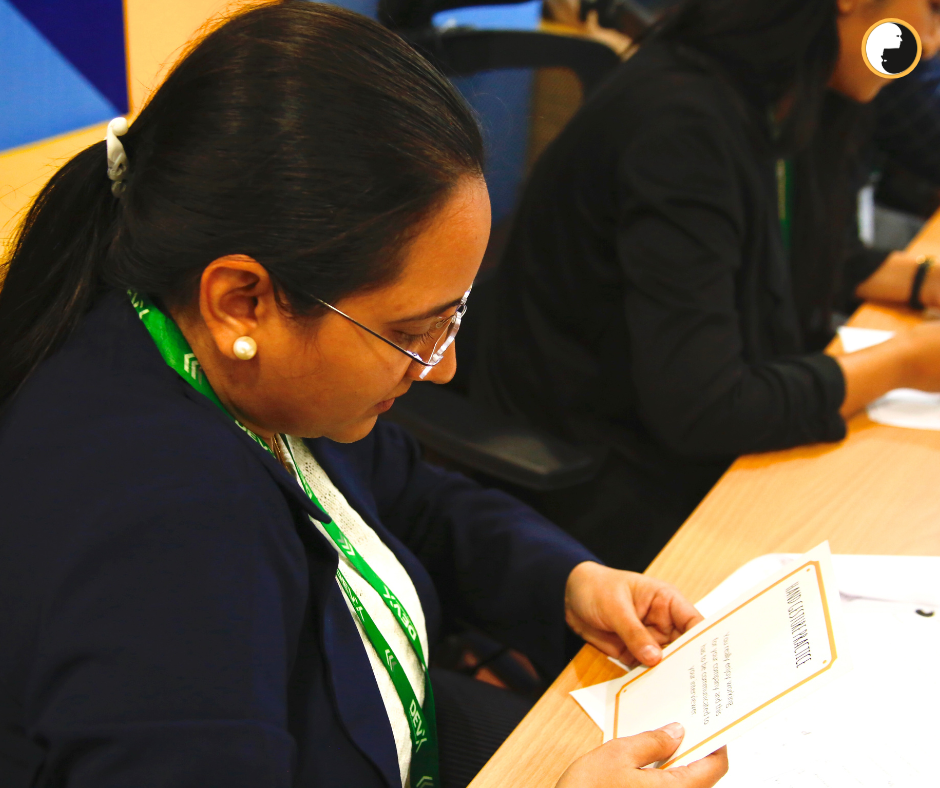
How We Design Activities at Simply Body Talk Academy
When we designed our certification modules, we didn’t begin by asking, “What activities should trainers conduct?”
We started by asking, “What situations do participants struggle with?”
For example, in our Interview Preparation module, activities are designed to help participants think under pressure, communicate their strengths naturally and become comfortable with unexpected questions.
In Public Speaking, the emphasis shifts towards audience engagement, managing attention and using body language to reinforce key messages.
Within Confidence Building, participants learn to recognise behaviours that unintentionally communicate uncertainty and practise replacing them with more composed responses.
For Professional Etiquette, activities recreate everyday workplace situations where respect, attentiveness and professionalism are communicated through behaviour rather than rules alone.
And in Leadership, we prepare young professionals for the transition into their first leadership role through situations that require credibility, influence and thoughtful communication.
Although every module uses different activities, the design philosophy remains the same. Every activity should develop a behaviour participants can immediately apply outside the training room.
Try These Activities
Rather than ending with a list of activities to copy, I’d like to leave you with a small challenge.
Here are a few activities that many trainers already use. As you read them, don’t think about how to conduct them. Instead, think about how you would adapt them for different learning objectives.
Activity 1: Self-Introduction
Ask participants to introduce themselves for one minute.
Your challenge:
How would you modify this activity for:
- Interview Preparation?
- Public Speaking?
- Confidence Building?
- Leadership?
Would you change the instructions? The observation points? The feedback? Or the debrief?
Activity 2: Role Play
Two participants perform a workplace conversation as a role play.
Your challenge: How would the same role play look different during an etiquette workshop compared with a leadership session?
Activity 3: Silent Observation
Participants observe a short interaction without hearing the conversation.
Your challenge: What behaviours would you ask them to observe if your objective was confidence? What would change if your objective was customer service?
As trainers, this is the mindset that helps us move beyond collecting activities and begin designing learning experiences.
Final Thoughts
The best training programs aren’t effective just because they include a lot of games and activities. They’re effective when participants left the room seeing themselves differently.
Body language activities should never exist simply to make a session enjoyable. They should help participants observe behaviours they were previously unaware of, practise new ways of communicating and leave with the confidence to apply those behaviours in real situations.
If you’re serious about building that level of expertise, learning how to design activities is far more valuable than collecting hundreds of ready-made exercises.
At Simply Body Talk Academy, that’s exactly what we focus on through our soft skills trainer certification, body language certification, and train the trainer programs. Along with ready-to-deliver curriculum, we help trainers understand the thinking behind every activity – why it works, what behaviour it develops, what to observe, and how to adapt it for different learning objectives. Because once you understand that process, you won’t just conduct activities – you’ll create learning experiences that participants remember long after the workshop ends.